
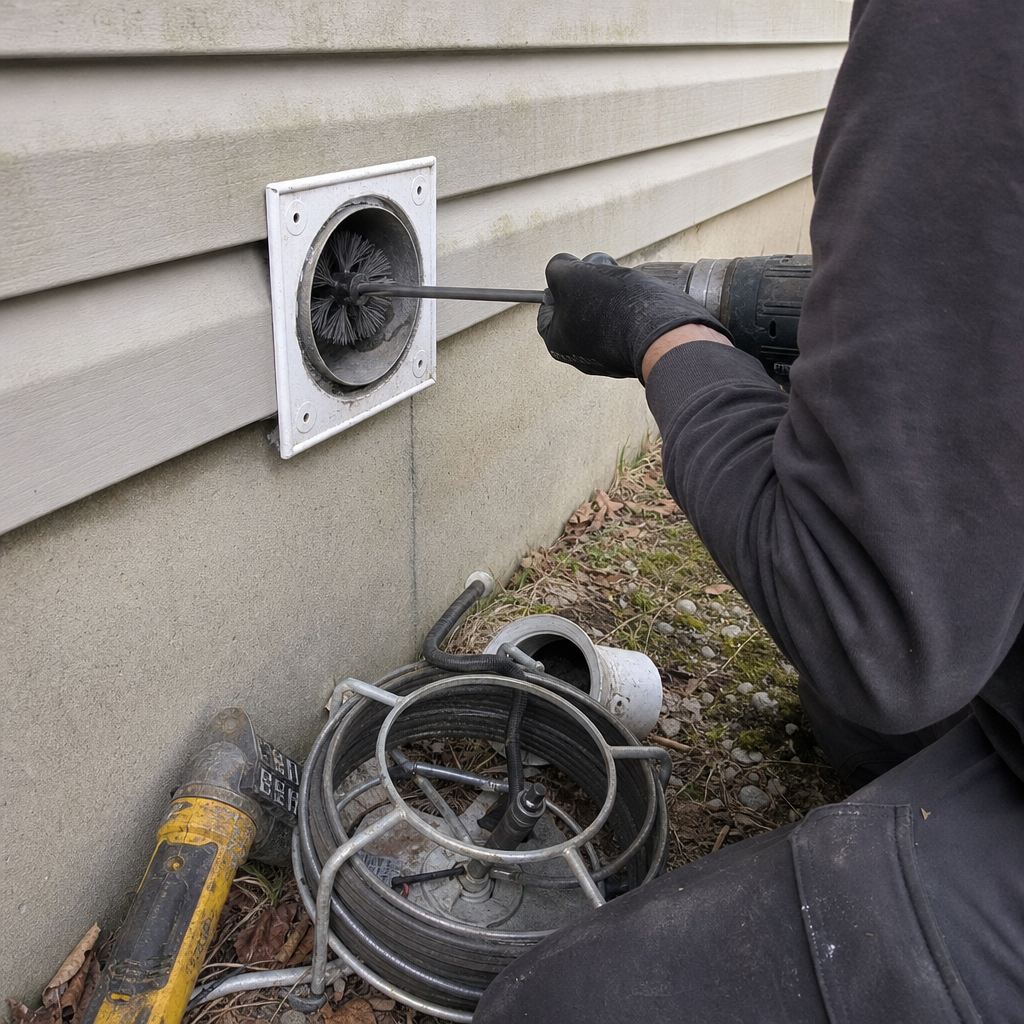
Fast, Reliable Dryer Vent Cleaning Across Harvard
Dryer vent cleaning in Harvard, MA typically costs $180–$340 for a standard residential cleaning, with vent rerouting or bird guard installation running $450–$850 depending on the home’s configuration. Most Harvard appointments are scheduled within 48 hours, and we’re familiar with the rural routes from Lowell out through Stow and Lancaster to reach homes along Captain Isaac Davis Highway and Great Road.
We’ve been driving these roads for 14 years. Thomas Hernandez, our owner and lead technician, handles every Dryer Vent Cleaning call personally — no subcontracted crews, no rotating technicians who need directions to your driveway twice. Harvard’s older housing stock presents specific challenges that generic duct cleaners miss: retrofitted vents running through uninsulated fieldstone cellars, attached barn structures with rodent pressure, and the freeze-thaw cycling that comes with central Massachusetts winters. We carry professional-grade equipment from Nikro and Abatement Technologies specifically to address these conditions. Call (877) 517-5646 for a free estimate.
Why Titan Air Duct Cleaning Lowell Is Harvard’s Preferred Dryer Vent Cleaning Company
Our reputation in Harvard has been built one appointment at a time — 389 verified reviews averaging 4.7 stars, with many from homeowners in the Center of Town area and near the Harvard Shaker Village Historic District who specifically mention Thomas showing up as both the person they spoke with on the phone and the technician who did the work.
Response time matters when you’re dealing with a blocked vent in a home where the dryer runs daily for a family of four or a multi-generational household. We’re typically in Harvard within two business days, sometimes same-day if we’re already on a call in Stow or Acton. The route up King Street from Lowell is familiar territory — we know which farm stands slow traffic on Saturday mornings, which stretches of Great Road get slick first in winter weather.
Local knowledge translates to better service. We understand that a vent inspection in a 1790s colonial near the Herb house requires a different approach than a routine cleaning in a 1980s ranch in Hudson. The irregular construction of Harvard’s historic homes — fieldstone foundations, attached ell structures, converted barn spaces — means we often find configurations that weren’t in any original plan. Fourteen years of specialized air duct and HVAC cleaning means we’ve seen these setups before and know how to address them without damaging irreplaceable historic fabric.
Our Dryer Vent Cleaning Services in Harvard
Dryer Vent Inspection
Every Harvard job starts with a thorough inspection using a borescope camera and airflow measurement tools. In homes near the Shaker Village or along Farmers Row, we’re specifically checking for condensation damage in uninsulated runs, rodent entry points in attached barn structures, and crushed flexible duct from decades-old HVAC retrofits. The inspection takes 20–30 minutes and gives us a clear picture of what we’re dealing with before we recommend any work. You’ll see the footage. We’ll explain what we’re looking at. Then we’ll quote exact pricing — no open-ended estimates that balloon once we’re inside your walls.
Vent Cleaning & Lint Removal
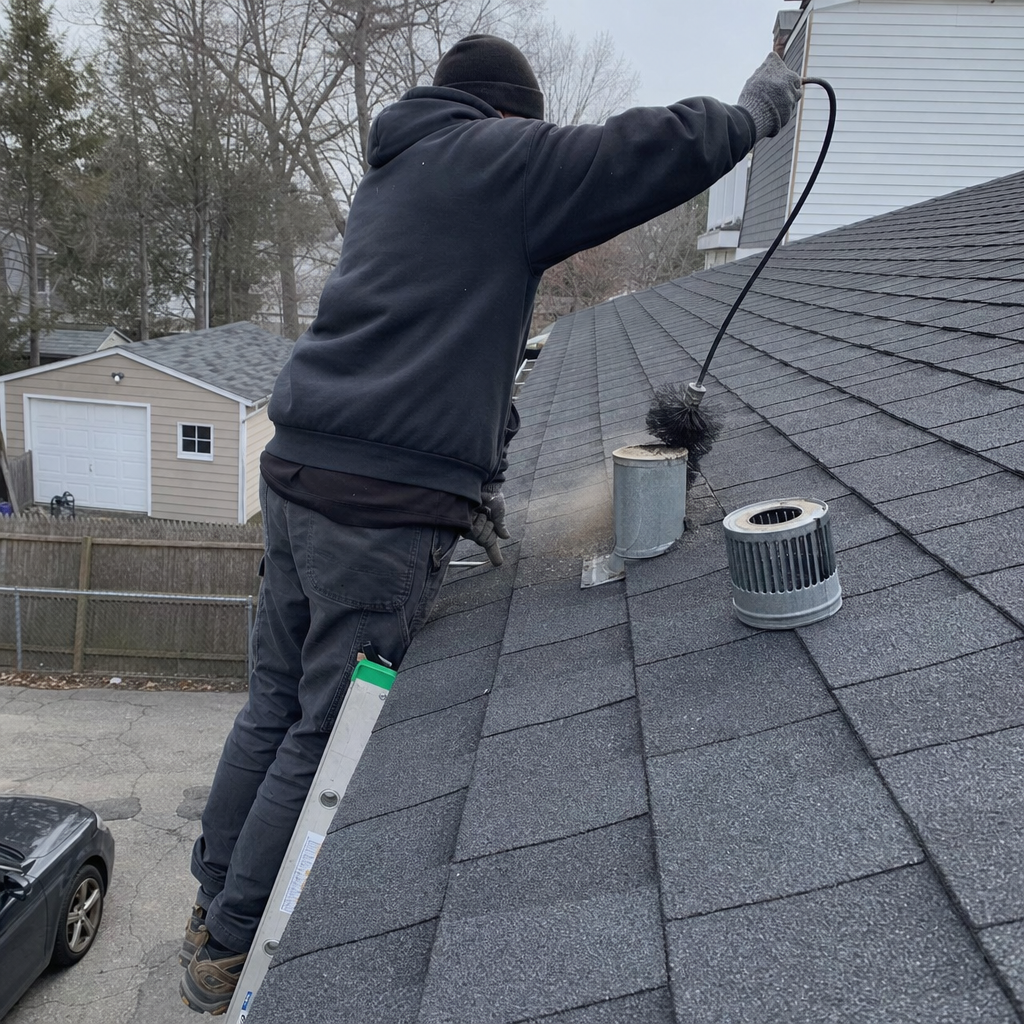
Harvard’s inland climate creates a specific lint accumulation pattern we don’t see in newer suburban towns. Cold, damp winters and the high humidity from surrounding woodland and wetland conservation areas — including the Oxbow National Wildlife Refuge — mean vents running through unheated cellars or crawl spaces develop condensation that wets lint into dense, sticky clumps. Standard dry lint brushes won’t touch this. We use Nikro’s rotary whip systems and high-velocity compressed air tools designed for remediation-grade jobs to break up and extract these blockages completely. For homes near active farmland, we also check for field dust and chaff that can compound the buildup seasonally.
Vent Rerouting
This is where our work in Harvard diverges most dramatically from standard residential cleaning. Many of the town’s older homes have dryer vents that were routed through spaces never intended for ductwork — uninsulated fieldstone cellars, crawl spaces open to the surrounding wooded landscape, or converted barn structures with no thermal envelope. On Farmers Row, we serviced a 1790s colonial farmhouse where the dryer vent ran through an uninsulated crawl space under a converted barn. The original vent had collapsed under years of freeze-thaw cycling, and we found heavy lint accumulation and rodent nesting — common in Harvard’s agricultural areas. We rerouted the vent through a new insulated chase and installed a bird guard to prevent re-entry.
Rerouting in a historic Harvard home typically runs $650–$1,200 depending on the path length, materials needed, and whether we’re working around fieldstone or timber framing. It’s not cheap. But it’s often the only permanent solution for vents that were poorly located from the start, and it eliminates the cycle of repeated cleanings that never fully solve the underlying problem.
Bird Guard Installation & Vent Cap Replacement
Harvard’s rural character means real wildlife pressure — not the occasional sparrow you’ll find in more developed towns, but determined woodpeckers, nesting starlings, and rodents that treat attached barns and ell structures as habitat. A standard flapper vent cap won’t survive a season in some of these locations. We install rigid metal bird guards with mesh screening sized to block pests while maintaining proper airflow, secured with fasteners that won’t work loose in freeze-thaw cycling. Vent cap replacement for historic homes requires careful material matching — we carry brushed aluminum and powder-coated steel options that don’t scream “new construction” against weathered clapboard or fieldstone.
What happens when you call
- 1
A real person answersNo phone trees — you reach a local pro.
- 2
You get an upfront price rangeHonest numbers before anyone is dispatched.
- 3
A background-checked tech heads outLicensed & insured, dispatched right away.
- 4
You approve before work beginsNothing starts until you say go.
Trusted Brands We Service in Harvard
We don’t show up with hardware-store tools and hope for the best. Our equipment roster includes Nikro rotary cleaning systems, Abatement Technologies HEPA containment, and Honeywell and Aprilaire components for air quality integration. For Harvard’s historic homes, this matters — the aggressive brush systems some crews use can damage fragile old ductwork or dislodge connections that were never properly secured during a 1970s HVAC retrofit. We match the tool to the job. We also stock common vent cap sizes and bird guard configurations so we’re not ordering parts and making you wait two weeks for a return visit. Most cap replacements and guard installations finish in a single appointment.
Common Dryer Vent Cleaning Problems We See in Harvard Homes
- Condensation and lint clumping in uninsulated fieldstone cellars. Harvard’s freeze-thaw cycles — sometimes swinging 40 degrees in a January week — create condensation inside vents routed through unheated stone foundations. Wet lint compacts into dense blockages that restrict airflow, extend drying times, and elevate fire risk. We find this consistently in Center of Town homes and properties near the Harvard Shaker Village Historic District.
- Rodent nesting in vents running through attached barns or detached agricultural structures. The farmland along Farmers Row and the wooded buffers around conservation land create sustained rodent pressure. Vents with any gap or deteriorated seal become nesting sites, sometimes completely packed with material that the homeowner mistakes for extreme lint buildup until we camera the line.
- Crushed or disconnected flexible foil vents from decades-old HVAC retrofits. When forced-air systems were added to Harvard’s colonial and cape-style homes, installers often used the cheapest flexible duct available and routed it through inaccessible spaces. Years of vibration, settling, and thermal cycling collapse these vents or pull them apart at joints — creating hidden lint accumulation zones that vent moisture and heat into wall cavities or crawl spaces instead of outside.
- Improper terminations that trap moisture against historic siding or fieldstone. Vents that terminate too close to clapboard, or that direct exhaust toward porous stone foundations, create chronic moisture damage that outlasts any cleaning. We relocate these terminations as part of our rerouting service, using proper clearances and directional fittings.
Pricing for Dryer Vent Cleaning in Harvard, MA
Here’s what dryer vent services actually cost in Harvard’s market:
| Service | Typical Range in Harvard |
|---|---|
| Standard dryer vent cleaning (single-story, accessible termination) | $180–$260 |
| Multi-story or extended-run cleaning | $240–$340 |
| Vent rerouting (new path through insulated chase) | $650–$1,200 |
| Bird guard installation | $120–$200 |
| Vent cap replacement (historic-compatible materials) | $150–$280 |
| Full inspection with borescope and airflow test | $85–$120 (credited toward cleaning if scheduled) |
What moves you toward the higher end: multiple story runs, access through finished spaces, fieldstone or timber framing that requires specialized fasteners, rodent damage repair, or the need to coordinate with other trades. What we don’t do: surprise you with trip charges, equipment fees, or “oh by the way” additions after we’ve started. The price we quote is the price you pay. Free estimates — call (877) 517-5646 and Thomas will walk through what you’re seeing and give you a straight number.
We Also Serve Cities Near Harvard
We’re regularly in Harvard from our Lowell base, and we schedule cluster appointments in surrounding towns to keep response times reasonable. We also provide dryer vent cleaning to homeowners in Stow, Lancaster, Acton, and Hudson — many with similar historic housing stock and the same rural vent challenges we see in Harvard.
Serving Harvard, MA — Our Local Coverage Area
We’re based in the Harvard area and know this community well. Use the map below to see our service coverage — if you’re nearby, we can almost certainly help.
FAQs — Dryer Vent Cleaning in Harvard
Harvard’s historic homes were built before forced-air systems existed, so dryer vents were retrofitted through uninsulated fieldstone cellars, crawl spaces, and converted barn structures that weren’t designed for ductwork. The freeze-thaw cycling of central Massachusetts winters creates condensation that wets lint into dense clumps, and the irregular routing with multiple joints traps debris that straight modern runs would shed. Call (877) 517-5646 and we’ll inspect your specific configuration — estimates are free.
Yes, if the current vent runs through an uninsulated space or has collapsed sections from freeze-thaw damage. Rerouting through a new insulated chase eliminates the condensation problem permanently and typically pays for itself within two to three years through improved dryer efficiency and eliminated repeat cleaning cycles. For a 1790s farmhouse on Farmers Row, we recently completed a reroute that dropped drying time from 90 minutes to 35. The investment was $875. Call (877) 517-5646 for an exact quote on your home.
Yes — we install rigid metal bird guards with pest-specific mesh on every Harvard job where wildlife pressure exists, which is most rural and agricultural-area homes. Standard flapper caps fail quickly against woodpeckers and nesting starlings; our guards are secured with fasteners that resist freeze-thaw loosening. Installation runs $120–$200 depending on cap size and access. Call (877) 517-5646 to schedule.
Homes in the Shaker Village area — with their historic construction, fieldstone foundations, and surrounding woodland — should have dryer vents inspected annually and cleaned every 12–18 months minimum. The combination of retrofit ductwork, elevated humidity from nearby conservation land, and mature tree cover that limits sun exposure and drying means lint accumulates faster than in newer, drier construction. If you dry heavy loads frequently or have a multi-person household, every 12 months is the safer interval. Call (877) 517-5646 to set up a recurring schedule.
Yes — we use period-appropriate materials and installation methods that don’t compromise historic fabric. For clapboard siding, we match fastener patterns and use brushed aluminum or powder-coated steel caps that weather similarly to existing trim. For fieldstone foundations, we mount to mortar joints rather than drilling stone, and we seal penetrations with proper flashing. We won’t install a bright white plastic cap on a 200-year-old farmhouse. Call (877) 517-5646 and Thomas will review your exterior and recommend options that function properly without looking wrong.
Written by Thomas Hernandez, Owner at Titan Air Duct Cleaning Lowell, serving Harvard since 2010.