
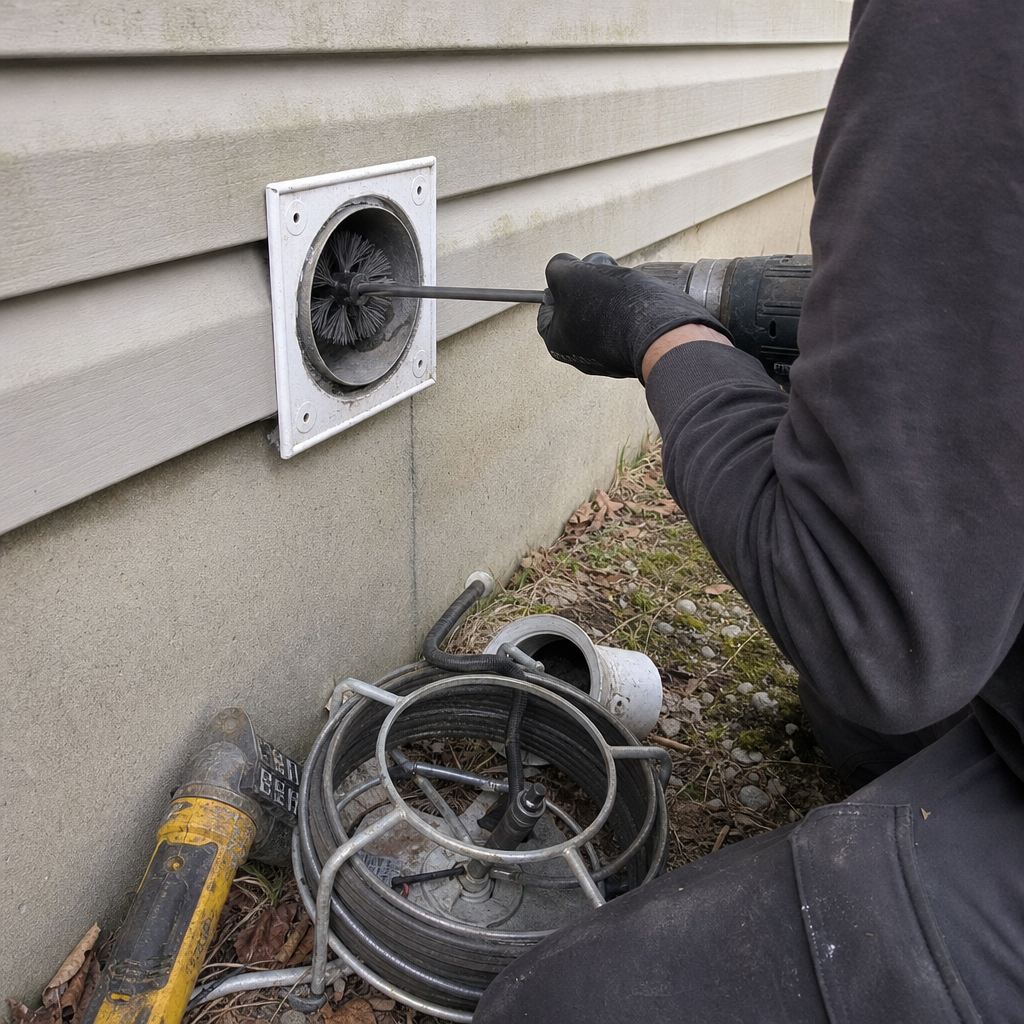
Fast, Reliable Dryer Vent Cleaning Across Dracut
Dryer vent cleaning in Dracut typically runs $150–$320 for standard residential jobs, with most appointments completed in under two hours. We’re usually on-site in Dracut within a day of your call, sometimes same-day if you’re near Lakeview Avenue or the Mammoth Road corridor.
We’ve been driving out to Dracut since we started this work — it’s a straight shot up from Lowell, and we know the difference between a quick ranch job off Broadway Road and a long vent run through a crawlspace in one of the acreage properties off the Dunstable line. Thomas Hernandez handles every job personally, and our Dryer Vent Cleaning crew carries the same Rotobrush and Nikro systems we use on commercial accounts. That matters in Dracut, where the post-WWII build-out left a lot of homes with detached workshops, oversized garage doors, and vent configurations that take more than a shop vac to sort out. Call (877) 517-5646 for a free estimate — we’ll give you a straight answer on what your setup needs.
Why Titan Air Duct Cleaning Lowell Is Dracut’s Preferred Dryer Vent Cleaning Company
Dracut homeowners aren’t looking for a franchise crew that treats every house the same. Thomas shows up — as the owner and the technician doing the work. Fourteen years, one specialty: air duct and HVAC systems, nothing else. That means when we pull up to a 1960s ranch off New Boston Road or a colonial near the Dracut-Tyngsboro line, we’re not guessing at what we’ll find.
Our 389 verified reviews averaging 4.7 stars include plenty from Dracut customers who specifically mention the difference it makes having the same person assess the job, run the equipment, and answer questions afterward. No delegated crew, no subcontractor learning your house on the fly.
Response time to Dracut is typically next-day, sometimes same-day for calls before noon. We know the local permitting environment — Dracut falls under Middlesex County building codes, and exterior vent modifications on homes within 100 feet of wetlands (common near the Merrimack River corridor) sometimes need extra attention. We’ve handled enough Dracut properties to flag those issues before they become problems.
The local knowledge runs deeper than geography. Dracut’s housing stock — ranch-style and colonial homes built in the 1960s–1980s suburban build-out — features original sheet-metal ductwork that has rarely been replaced or professionally cleaned. Many of these homes were built with oil-fired forced-air heating systems, leaving interior duct surfaces coated with decades of oily soot residue. That same soot profile affects dryer vents in homes where laundry rooms share mechanical space with furnace rooms, or where vent runs pass through areas with accumulated combustion byproducts.
Our Dryer Vent Cleaning Services in Dracut
Dryer Vent Inspection
Every Dracut job starts with a full inspection — not a quick peek behind the dryer. We run a camera through the vent line to map the full run, identify sagging sections, and check for corrosion at joints. In Dracut’s 1960s–1970s ranch neighborhoods, it’s common to find original oil-fired furnaces still in service paired with duct systems that have never been cleaned — the oily, black film coating interior sheet-metal walls is a direct byproduct of oil combustion migration and is missed entirely by homeowners who assume a new furnace filter is sufficient maintenance. That same oily residue can coat dryer vent interiors in shared mechanical spaces, creating a fire hazard standard inspections miss. We document everything and show you the footage before we quote the work.
Vent Cleaning
Our vent cleaning in Dracut uses Rotobrush and Nikro systems — professional-grade equipment built for more than a basic residential clean. The rotating brush heads and high-CFM vacuum extraction handle the compacted lint and oily soot deposits that accumulate in Dracut’s older homes. Dracut’s position in the Merrimack River valley produces higher ambient humidity in lower-lying neighborhoods, accelerating moisture infiltration into aging vent systems and creating conditions where lint clumps harden into dense blockages. The long northern Massachusetts heating season means forced-air systems run continuously for months, drawing fine glacial sandy dust through shared wall cavities and mechanical chases. We extract it all, not just the loose surface lint.
Lint Removal
Lint removal sounds simple until you’ve seen what 15 years of accumulation looks like packed into a 45-foot vent run. On a recent job at a Dracut ranch home on Lakeview Avenue, our crew tackled a dryer vent clogged with 15 years of lint and corrosion. The vent ran 45 feet through an unheated crawlspace to a side wall, and the heavy metal spring on the garage door required careful maneuvering. Using a Rotobrush system, we extracted 8 pounds of compacted debris and installed a Guardsman bird guard on the exterior cap. That’s not unusual for Dracut’s acreage properties — longer runs, more bends, and lint that hardens into something closer to felt than fluff. We remove it mechanically; no leaf blowers, no compressed air shortcuts that just relocate the problem.
Vent Rerouting
Some Dracut vents were routed wrong from day one — too long, too many turns, or terminated in crawlspaces where moisture and lint create a breeding ground for mold. Dracut’s rural properties often have detached workshops with dryers vented through attics or underground runs that violate modern code. We reroute to the shortest practical path with proper slope and termination, using rigid metal duct where flexible foil has failed. Every reroute we do in Dracut accounts for the heavy-duty garage door springs and oversized door panels common in workshop setups — we don’t knock equipment out of alignment or damage weatherstripping to access your vent.
Bird Guard Installation
Dracut’s mix of wooded lots and river-valley wetlands attracts birds, squirrels, and the occasional raccoon to warm vent terminations. We install Guardsman bird guards on exterior caps — same brand we used on that Lakeview Avenue job — to block nesting material without restricting airflow. The guards are stainless steel, not cheap plastic that cracks in Massachusetts winters. If you’ve found a nest in your vent cap, we’ll clear it, sanitize the line, and guard it against recurrence.
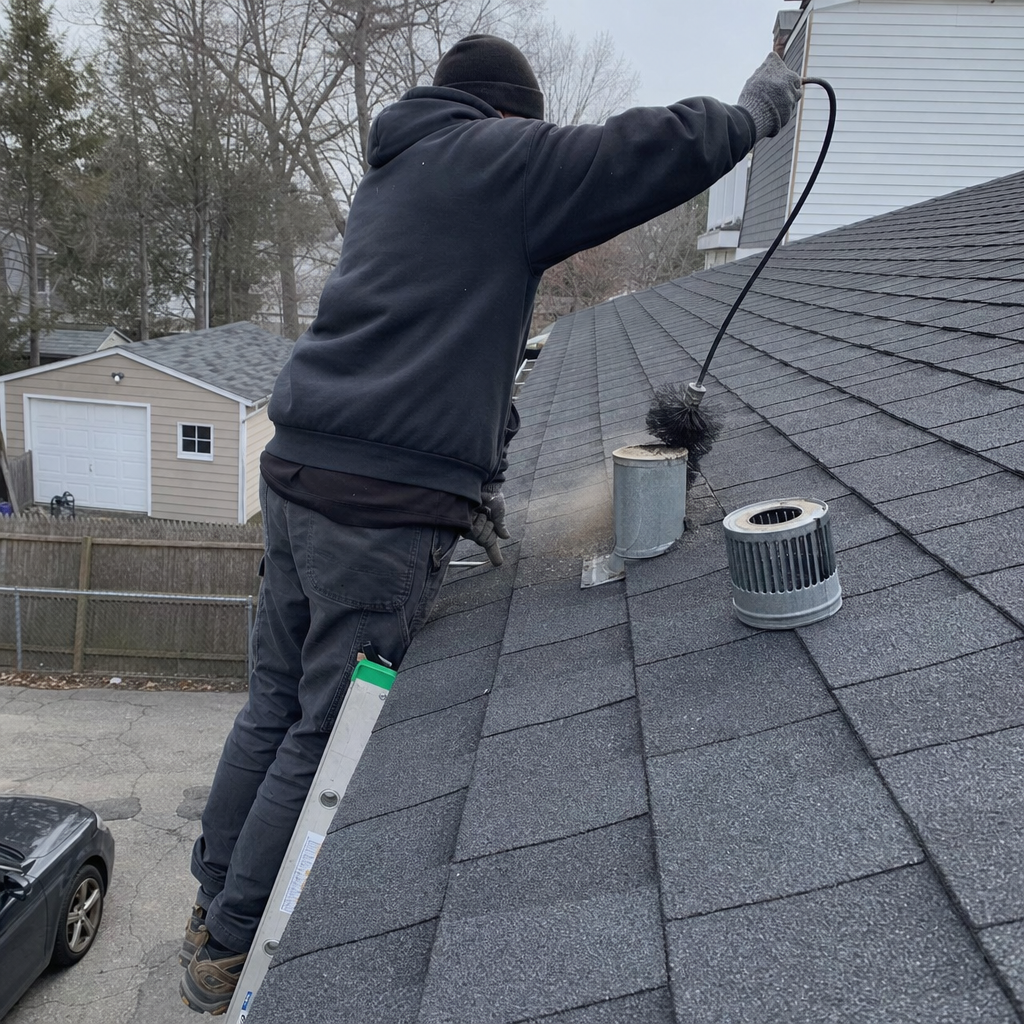
Vent Cap Replacement
Corroded, missing, or improperly screened vent caps are an open invitation for pests and weather infiltration. We stock replacement caps sized for standard 4-inch duct and can source larger diameters for commercial-grade dryers in workshop setups. Installation includes proper caulking and exterior sealing — critical in Dracut’s freeze-thaw climate, where water infiltration around a loose cap can rot sill plates in a single season.
What happens when you call
- 1
A real person answersNo phone trees — you reach a local pro.
- 2
You get an upfront price rangeHonest numbers before anyone is dispatched.
- 3
A background-checked tech heads outLicensed & insured, dispatched right away.
- 4
You approve before work beginsNothing starts until you say go.
Trusted Brands We Service in Dracut
We run Rotobrush and Nikro cleaning platforms on every Dracut job — the same systems used in commercial remediation work, not the consumer-grade tools sold at hardware stores. For air quality and sanitizing extensions, we work with Honeywell and Aprilaire products. We stock common vent caps, bird guards, and transition duct fittings locally, so most Dracut jobs don’t wait on parts. If your setup needs something specific — a high-temperature cap for a gas dryer in a workshop, or an extended wall termination for a deep-set foundation — we source it fast and install it right.
Common Dryer Vent Cleaning Problems We See in Dracut Homes
- Oversized garage doors and heavy springs trap lint and block access. Dracut’s post-WWII homes feature detached workshops and oversized garage doors with heavy-duty springs, requiring specialized tools and techniques for dryer vent access and cleaning in rural layouts. The springs themselves don’t fail into the vent, but the tight clearances around framed openings mean vent terminations often get crushed or misaligned when doors cycle.
- Long vent runs hide kinks and sagging sections standard tools miss. Acreage properties in Dracut frequently run 30–50 feet of flexible duct through attics or crawlspaces. Gravity and vibration create low points where lint dams form. Our camera inspection finds them; our brush systems clean them without disassembling finished basement ceilings.
- DIY leaf blower “cleaning” fails on oily soot deposits. Self-reliant homeowners may attempt DIY cleaning with leaf blowers, which fail to remove oily soot deposits from oil furnace exhaust residue. The blower pushes surface lint past the blockage and leaves the hardened core. We see this regularly — the vent tests clear briefly, then reclogs in weeks because the actual obstruction never moved.
- Humidity from the Merrimack valley hardens lint into dense blockages. Dracut’s river-valley humidity means lint doesn’t stay fluffy. It absorbs moisture, compacts, and eventually forms a nearly solid plug that restricts airflow and forces dryers to run longer cycles. That’s the “two cycles to dry” call we get constantly — and it’s fixable, not a reason to replace a working dryer.
Pricing for Dryer Vent Cleaning in Dracut, MA
Here’s what dryer vent cleaning costs in Dracut’s market:
| Service | Typical Range |
|---|---|
| Standard vent cleaning (single-story, direct exterior termination) | $150–$220 |
| Multi-story or extended run (25+ feet, crawlspace/attic routing) | $220–$320 |
| Vent rerouting (new path, materials, labor) | $350–$600 |
| Bird guard installation | $75–$125 |
| Vent cap replacement | $85–$150 |
| Camera inspection (standalone, no cleaning) | $125–$175 |
What moves you up or down within these ranges: vent length, number of bends, accessibility (crawlspace vs. basement vs. garage), and whether we find damage requiring repair. Homes near the Merrimack River in lower Dracut often need more time due to corrosion at exterior terminations. We quote upfront after inspection — no range-shifting once we’re on site. Estimates are free. Call (877) 517-5646 to schedule.
We Also Serve Cities Near Dracut
We’re based in Lowell and regularly work in Pelham across the New Hampshire line, Tyngsboro along the Merrimack, Chelmsford to the south, and throughout Lowell itself. If you’re on the border — say, a Dracut address with a Pelham zip or a Tyngsboro-adjacent lot — we’ll sort out the logistics and get there. Same equipment, same technician, same straight pricing.
Serving Dracut, MA — Our Local Coverage Area
We’re based in the Dracut area and know this community well. Use the map below to see our service coverage — if you’re nearby, we can almost certainly help.
FAQs — Dryer Vent Cleaning in Dracut
We access attic-routed workshop vents through the attic hatch or a gable vent, running our Rotobrush system from the termination cap inward or from the attic down, whichever gives the straighter path. In Dracut’s acreage properties, these runs often pass through unheated space where condensation has degraded flexible duct — we inspect with a camera first, then clean or recommend replacement if the duct integrity is compromised. Heavy garage door springs near the attic access get padded and protected. Call (877) 517-5646 to describe your setup; we’ll confirm the approach before we head out.
Yes — oil combustion produces fine soot that migrates through shared mechanical spaces and can coat interior vent surfaces, especially in older Dracut ranches where the laundry area sits near the furnace room. That oily film captures lint more aggressively than clean metal, accelerating blockages and increasing fire risk. Our cleaning process addresses both the lint accumulation and the soot substrate; standard DIY methods don’t. If your furnace room and laundry share a wall or chase, mention it when you call — we’ll inspect the full run, not just the obvious sections.
Every 12–18 months for most Dracut homes, and every 9–12 months if you dry heavy loads frequently or have a long vent run. Dracut’s Merrimack River valley humidity means lint compacts faster here than in drier inland Massachusetts towns. The glacial sandy dust drawn in during our long heating season adds abrasive particulate that builds up beyond what lint alone would create. If your dryer starts taking longer cycles or the exterior flap barely opens during operation, you’re already past due — don’t wait for a calendar reminder.
Yes — we remove the nest, sanitize the vent line with appropriate treatment, and install a Guardsman bird guard on a new or existing cap to prevent recurrence. In Dracut’s wooded neighborhoods near the river, we see this most often in spring and early fall. The nest material itself is highly flammable and restricts airflow severely; it’s not a delayable maintenance item. We carry replacement caps in common sizes and can source same-day for unusual configurations. Call (877) 517-5646 — we’ll prioritize nest-blocked vents same day when possible.
Almost certainly — extended drying time is the most reliable indicator of vent restriction, and in Dracut’s older housing stock with long runs and accumulated soot, it’s rarely the dryer’s fault. Before you consider replacing a heating element or buying a new machine, have the vent inspected. We’ve restored normal single-cycle drying to dozens of Dracut homes by extracting blockages the homeowner didn’t know existed. The inspection is quick, the estimate is free, and the fix usually takes under two hours. Call (877) 517-5646 — we’ll confirm whether it’s the vent or something else, no charge for the diagnosis.
Written by Thomas Hernandez, Owner at Titan Air Duct Cleaning Lowell, serving Dracut and the Merrimack Valley since 2010.