
Fast, Reliable Air Quality & Sanitizing Across Lowell
Air quality and sanitizing service in Lowell typically runs $280–$650 for residential duct systems, with most mill-conversion lofts and triple-deckers falling in the $340–$520 range due to heavier baseline contamination and irregular access. We’re usually on-site in Lowell within 24–48 hours, and same-day scheduling opens up most weeks for urgent mold or odor issues. Call (877) 517-5646 for a free estimate.
We’ve been working in Lowell for 14 years, and there’s no duct configuration in this city we haven’t seen. From the converted Boott Mills lofts along the Pawtucket Canal to the triple-deckers packed into the Acre and Back Central, Lowell’s housing stock demands a technician who understands what happens when 19th-century construction meets forced-air retrofit. Thomas Hernandez shows up as both owner and lead technician on every job — not a subcontracted crew learning your building on the fly.
Why Titan Air Duct Cleaning Lowell Is Lowell’s Preferred Air Quality & Sanitizing Company
Our Air Quality & Sanitizing team has built its reputation one Lowell job at a time. We’ve treated ducts in the Hamilton Manufacturing lofts off Dutton Street, sanitized supply runs through the historic Belvidere neighborhood’s two-families, and installed UV lights in Highlands triple-deckers where summer humidity from the Merrimack River valley turns coil pans into petri dishes. That local pattern recognition matters — we know which buildings have unsealed brick wall penetrations before we arrive.
389 customers have reviewed our work, averaging 4.7 stars. Those aren’t cherry-picked testimonials; they’re verifiable records of consistent outcomes across a city with some of the most challenging residential ductwork in Massachusetts. Lowell homeowners specifically mention our willingness to explain what we found and why it matters — because when you’re paying to sanitize a system you can’t see, you deserve a technician who shows you the contamination, not just a before-and-after photo from someone else’s job.
Thomas Hernandez personally handles every air quality and sanitizing project in Lowell. That means 14 years of specialized duct and HVAC experience applied directly to your system — not delegated to a crew that cleaned carpets last week and ducts this week. We carry Rotobrush, Nikro, and Abatement Technologies equipment built for remediation-grade work, because Lowell’s legacy contamination often exceeds what basic residential tools can handle.
Our Air Quality & Sanitizing Services in Lowell
Mold Treatment
Mold treatment in Lowell’s mill-conversion lofts starts with understanding why it keeps coming back. The Merrimack River valley channels moisture and fog directly into the city, and that humidity infiltrates ductwork through unsealed brick wall penetrations that are nearly universal in converted mill buildings. We’ve treated mold in Boott Mills units where the supply run passed through 18 inches of exterior masonry with zero vapor barrier — the wall wicks seasonal condensation straight into the duct. Our process includes mechanical removal with Abatement Technologies HEPA extraction, application of Guardsman biocide to registered porous surfaces, and identification of moisture sources that need addressing before the mold returns. A typical residential mold treatment in Lowell runs $320–$580; mill-conversion lofts with multiple wall penetrations often reach $450–$720.
Bacteria Sanitizing
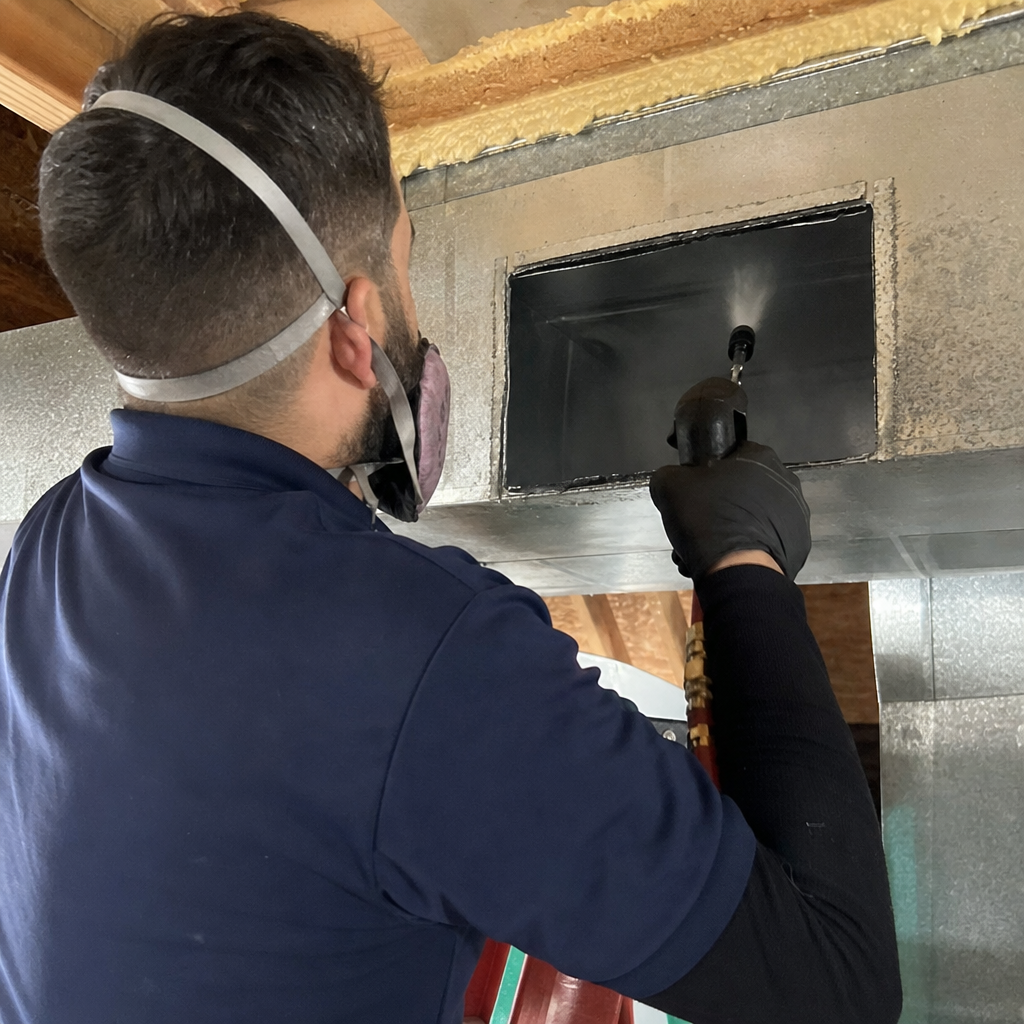
Bacteria sanitizing in Lowell addresses a problem most homeowners don’t know they have. The city’s dominant stock of pre-1930 triple-deckers and converted mill buildings were originally heated with steam or hot-water radiators — forced-air ductwork was added decades later through cramped framing cavities that had accumulated generations of organic debris. In the Acre and Centralville neighborhoods, we regularly find supply runs that pass through joist bays still packed with century-old dust, skin cells, and fiber residue that standard cleaning doesn’t fully remove. Our bacteria sanitizing applies EPA-registered antimicrobial agents through the full duct system, with particular attention to return plenums and coil cabinets where biological loading concentrates. Residential bacteria sanitizing in Lowell typically costs $280–$480 as a standalone service, or $180–$320 when bundled with full duct cleaning.
Odor Removal
Odor removal in Lowell requires identifying the source, not masking it. Musty smells in mill-conversion apartments along John Street or Market Street almost always trace to moisture-driven microbial growth in ductwork with legacy textile-fiber contamination — the cotton and wool dust that accumulated before conversion mixes with condensation to create a paste that harbors persistent odor. Surface spraying doesn’t reach it. We remove the debris mechanically, treat with oxidizing agents that break down odor molecules at the source, and install Honeywell or Aprilaire filtration upgrades where the building envelope allows. Typical odor remediation in Lowell runs $340–$560 for residential systems, with severe contamination in unsealed masonry penetrations occasionally reaching $680.
UV Light Installation
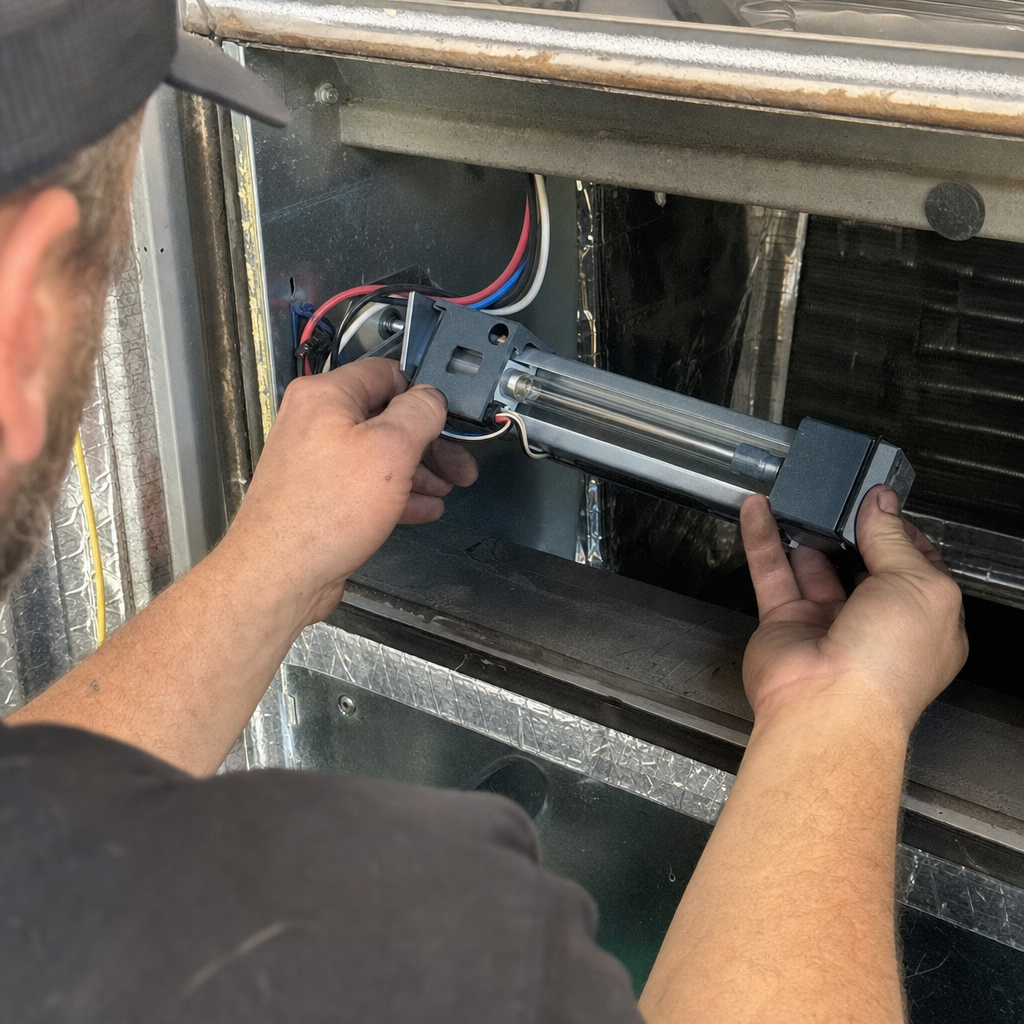
UV light installation is our most-requested add-on in Lowell, and for good reason. The city’s long heating season — November through March with systems running continuously — compresses a full year’s particulate loading into duct walls before spring. Add Merrimack Valley humidity, and you’ve got ideal conditions for mold and bacterial growth on coils and in drain pans. We install Honeywell UV germicidal lights at the coil and plenum, sized to the system’s CFM and duct dimensions. In triple-deckers with limited access, we’ll cut proper service panels rather than half-treating around obstacles. UV installation in Lowell typically runs $380–$620 including electrical connection and mounting; most customers see measurable reduction in musty odors within 72 hours of first operation.
What happens when you call
- 1
A real person answersNo phone trees — you reach a local pro.
- 2
You get an upfront price rangeHonest numbers before anyone is dispatched.
- 3
A background-checked tech heads outLicensed & insured, dispatched right away.
- 4
You approve before work beginsNothing starts until you say go.
Trusted Brands We Service in Lowell
We don’t show up with equipment we can’t name. Our Rotobrush and Nikro systems handle the mechanical removal; Abatement Technologies HEPA negative-air machines contain contamination during active mold work. For air quality outcomes that last, we specify Honeywell and Aprilaire UV lights, filtration upgrades, and humidity controls — brands with local distribution so replacement lamps and filters don’t leave Lowell customers waiting. Guardsman biocides complete our sanitizing protocol. These aren’t “professional-grade” in the vague sense — they’re the same platforms we use on commercial remediation jobs, applied to residential systems that need that level of performance.
Common Air Quality & Sanitizing Problems We See in Lowell Homes
- Legacy textile-fiber residue in mill-conversion ducts clogs standard cleaning tools and smothers sanitizing agents if not pre-treated with a degreasing step. At a converted Boott Mills unit on John Street, we opened a supply run passing through an 18-inch brick wall and found a fibrous sludge that had jammed our Rotobrush. The paste — a mix of condensed humidity and century-old textile dust — required our Abatement Technologies HEPA vac and manual scraping. After treating with our Guardsman biocide and installing a Honeywell UV light at the coil, the owners reported a dramatic drop in musty smells.
- Seasonal moisture wicking through unsealed brick walls into ductwork promotes mold regrowth within weeks of cleaning unless a vapor barrier is installed at the penetration. We see this repeatedly in Hamilton Manufacturing-era conversions where flex duct was routed through exterior masonry with no sleeve or seal.
- Retrofit duct runs in triple-decker attics and crawl spaces have sharp bends and undersized access panels, making thorough manual brushing of all branches impossible without cutting new access doors. The Highlands and Belvidere neighborhoods are full of these configurations — we carry the tools to cut proper panels and seal them afterward.
- Compressed winter heating seasons in Lowell’s cold-climate location load ducts with debris that standard spring cleaning schedules miss. By March, we’ve got six months of accumulated particulate baked onto duct walls — it takes more than a light vacuum to restore air quality.
Pricing for Air Quality & Sanitizing in Lowell, MA
| Service | Typical Lowell Range |
|---|---|
| Bacteria Sanitizing (standalone) | $280–$480 |
| Bacteria Sanitizing (with duct cleaning) | $180–$320 |
| Mold Treatment — residential | $320–$580 |
| Mold Treatment — mill-conversion loft | $450–$720 |
| Odor Removal | $340–$560 |
| Severe odor with masonry penetration | Up to $680 |
| UV Light Installation | $380–$620 |
| Allergen Reduction Package | $420–$680 |
What moves you within these ranges? Square footage is the baseline, but Lowell’s specific factors matter more than in surrounding towns. Multiple brick wall penetrations add labor for proper treatment. Triple-decker attics with limited access may need panel cutting. Legacy textile contamination requires pre-treatment and heavier HEPA extraction. We don’t guess — we inspect first, quote exact, and estimates are always free. Call (877) 517-5646 to schedule.
We Also Serve Cities Near Lowell
Our service radius extends to Dracut, Chelmsford, Tyngsboro, and Tewksbury — though we find their newer housing stock and conventional duct configurations generally present lighter contamination loads than what we encounter in Lowell’s historic buildings. We treat them with the same equipment and the same technician; they just don’t break our tools as often.
Serving Lowell, MA — Our Local Coverage Area
We’re based in the Lowell area and know this community well. Use the map below to see our service coverage — if you’re nearby, we can almost certainly help.
FAQs — Air Quality & Sanitizing in Lowell
The musty smell returns because standard duct cleaning doesn’t address the moisture source. In Lowell’s converted mills, supply runs often pass through unsealed brick exterior walls where seasonal condensation wicks into the duct and reactivates microbial growth within weeks. We treat the odor source with mechanical debris removal, biocide application, and — critically — identify wall penetrations that need vapor barriers or sleeve seals to stop the moisture cycle. Call (877) 517-5646 and we’ll inspect your specific routing.
Yes, with proper technique and equipment. Lowell’s triple-deckers in neighborhoods like the Acre, Centralville, and Back Central have balloon framing and lath-and-plaster walls that require care — we use flexible-shaft Rotobrush systems that navigate tight joist bays without impact damage, and we cut access panels only where structurally appropriate, sealing them with code-compliant covers afterward. We’ve completed hundreds of these jobs without structural compromise. Call for a free assessment of your specific framing configuration.
We find a paste-like debris unique to Lowell’s industrial heritage: century-old cotton and wool fiber dust mixed with condensation from moisture wicking through brick masonry. This fibrous sludge jams standard residential equipment and harbors persistent mold and odor. Our Abatement Technologies HEPA systems and manual extraction tools handle it; basic vacuum-and-brush methods don’t. The Boott Mills unit on John Street we referenced required three hours of mechanical removal for a single supply run — typical suburban systems take 20 minutes.
Rarely. Replacement is typically only necessary when flex duct has collapsed internally or sheet metal runs are rusted through — we assess this during inspection. Most Lowell mill-conversion systems are salvageable with proper mechanical cleaning, biocide treatment, and moisture-source remediation. Replacement quotes from other contractors often assume standard residential conditions; our 14 years in Lowell’s historic buildings means we know when repair and sanitizing will work, and we’ll tell you honestly when it won’t. Free estimates make that conversation risk-free.
The Merrimack River valley channels fog and moisture directly into Lowell, raising summer relative humidity inside ductwork and promoting microbial growth on any organic residue present. Winters are cold enough for continuous heating operation, which bakes debris onto duct walls and creates ideal spring germination conditions when humidity rises. We recommend UV light installation and proper filtration to extend intervals between full sanitizing treatments — typically 3–5 years in Lowell versus 5–7 in drier inland locations. Call (877) 517-5646 for humidity-specific recommendations for your building.
Written by Thomas Hernandez, Owner at Titan Air Duct Cleaning Lowell, serving Lowell since 2010.