
Fast, Reliable Air Quality & Sanitizing Across Exeter
Air duct sanitizing and mold treatment in Exeter, NH typically runs $280–$650 depending on system size and contamination level, and most jobs are completed in a single visit. If you’re smelling musty air from your vents or dealing with persistent allergies, the problem usually isn’t your filter—it’s biological growth inside ductwork that Exeter’s river-valley humidity makes worse than almost anywhere else in Rockingham County. We’re based in Lowell, MA, and we make the drive up Route 125 to Exeter regularly—usually same-day or next-day for active mold concerns. Call (877) 517-5646 for a free estimate, and Thomas will walk you through what he’s actually seeing in your system before any work starts.
Exeter isn’t like the inland towns. The Squamscott River tidal flats and Great Bay estuary keep humidity here 10–15% higher year-round than places like Manchester or Concord. That moisture finds its way into retrofitted ductwork in 18th-century colonials and mid-century capes, and it stays there. Our Air Quality & Sanitizing team treats Exeter homes differently because the conditions demand it—cleaning without moisture control is a temporary fix at best.
Why Titan Air Duct Cleaning Lowell Is Exeter’s Preferred Air Quality & Sanitizing Company
We’ve worked in enough Exeter homes to know the pattern. The historic district around Water Street and the neighborhoods off Court Street near the floodplain—ZIP 03833—have ductwork configurations we don’t see anywhere else in our service area. Stone cellars, uninsulated chases, supply runs that were cobbled into structures built two centuries before forced-air existed. Thomas Hernandez, our owner and lead technician, has handled these systems personally for 14 years. He doesn’t delegate to a crew; he shows up with the Rotobrush and Nikro equipment and diagnoses what he’s looking at.
Our 389 verified reviews averaging 4.7 stars include Exeter homeowners who initially hired cut-rate cleaners and called us six months later when the smell came back. The difference isn’t ambition—it’s equipment and methodology. We carry Abatement Technologies fogging systems and Honeywell UV platforms that most residential operations don’t stock. When you’re working in a pre-1900 colonial with 30 feet of damp sheet metal below grade, that matters.
Response time to Exeter is typically same-day for mold concerns and next-day for standard sanitizing assessments. We know the Route 125 corridor, the seasonal traffic patterns around Phillips Exeter Academy, and the access challenges in older neighborhoods with narrow driveways and tight cellar stairs. That local familiarity means we show up with the right gear the first time—not a follow-up trip because we underestimated the job.
Our Air Quality & Sanitizing Services in Exeter
Mold Treatment
Mold remediation in Exeter’s ductwork starts with understanding why it’s there. The Squamscott River’s tidal influence keeps relative humidity elevated even in winter, and retrofitted ducts in stone cellars or uninsulated crawl spaces never fully dry out. A typical mold treatment in Exeter runs $340–$620 for residential systems. We use Rotobrush mechanical agitation to dislodge biofilm from irregular duct interiors—critical in older homes where sheet metal seams aren’t sealed—followed by Abatement Technologies antimicrobial fogging that reaches branch lines consumer products can’t touch. In a pre-1900 colonial on Court Street near the Squamscott floodplain, we found supply ductwork running through a damp stone cellar with visible mold on 30 feet of unsealed sheet metal. We treated the run with Rotobrush agitation and Abatement Technologies antimicrobial fog, sealed three major leaks in the chase, and installed a Honeywell UV light at the air handler. The homeowner, a self-reliant type, told us he’d been smelling must for years but assumed it was just “old house smell.” Without sealing the moisture pathway and adding continuous UV suppression, the mold would have returned within two seasons.
Bacteria Sanitizing
Bacterial contamination in Exeter ducts often accompanies mold but requires distinct treatment. We apply EPA-registered sanitizers through pressurized fogging systems that coat the full interior surface area—not just the accessible trunk lines. Cost ranges from $280–$450 for standard residential systems. In Exeter’s older homes with original 1950s–1970s sheet-metal duct systems, accumulated particulate creates a nutrient base for bacterial colonies that standard filter changes won’t address. We see this particularly in mid-century ranch and cape-style homes on the town’s outskirts, where decades of organic debris have compacted in low-velocity branch runs.
Odor Removal
Persistent musty odor in Exeter homes usually traces to one of three sources: active mold in below-grade duct runs, bacterial biofilm on coil surfaces, or moisture-saturated insulation inside plenums. Our odor elimination protocol runs $320–$580 and includes source identification, mechanical cleaning, sanitizing, and—critically—moisture-pathway remediation. Masking agents or consumer ozone generators don’t work here because the humidity continuously regenerates the problem. We’ve treated homes near the Great Bay estuary where homeowners had tried three different “deodorizing” duct cleanings before we identified that the real issue was an unsealed return plenum pulling cellar air directly into the system.
UV Light Installation
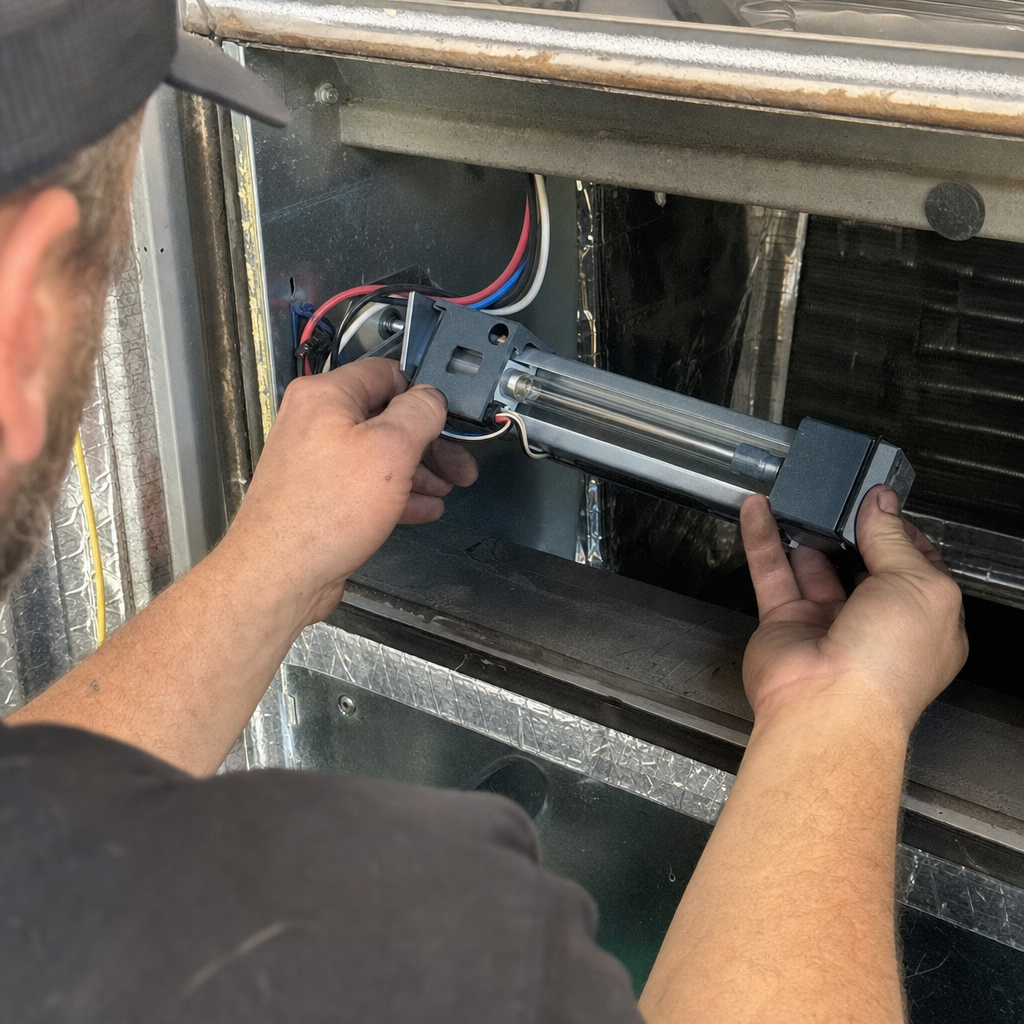
UV-C germicidal lights installed at the air handler provide continuous suppression of mold and bacterial growth—essential in Exeter’s high-humidity environment. A professional UV installation with Honeywell or Aprilaire equipment runs $380–$650 including mounting, electrical connection, and bulb. We size the lamp based on your system’s CFM and coil dimensions, not a one-size-fits-all stick-on unit. For Exeter homes with stone-cellar duct runs or crawl-space supply lines, UV is often the difference between annual mold recurrence and a permanently controlled environment. The lamp requires annual bulb replacement—about $85–$120—and we handle that for Exeter customers as part of our maintenance schedule.
What happens when you call
- 1
A real person answersNo phone trees — you reach a local pro.
- 2
You get an upfront price rangeHonest numbers before anyone is dispatched.
- 3
A background-checked tech heads outLicensed & insured, dispatched right away.
- 4
You approve before work beginsNothing starts until you say go.
Trusted Brands We Service in Exeter
We don’t show up with hardware-store equipment and hope for the best. Our Rotobrush and Nikro cleaning platforms are built for remediation-grade work, and our sanitizing protocols use Abatement Technologies delivery systems that most residential-only crews don’t carry. For air quality hardware, we install Honeywell and Aprilaire UV lights and filtration systems—brands with documented efficacy data, not marketing claims. We keep common replacement bulbs and filters in stock for Exeter customers, so when your UV lamp needs changing or your media filter loads up during pollen season, you’re not waiting on a warehouse shipment. That matters in a town where the estuary winds carry allergens inland that inland NH towns don’t see.
Common Air Quality & Sanitizing Problems We See in Exeter Homes
- “Old house smell” that’s actually mold. Homeowners in Exeter’s historic district—particularly around the colonial core near Water Street—often dismiss musty odors as inevitable in older homes. In reality, that smell is usually active mold in retrofitted ductwork running through damp stone cellars. The Squamscott’s tidal influence keeps these spaces humid enough for continuous growth.
- Spring thaw flooding in below-grade duct runs. Technicians working in Exeter’s older downtown-adjacent neighborhoods routinely find ductwork routed through unfinished stone or brick-walled cellars just feet from the Squamscott floodplain. These below-grade runs stay damp enough that visible microbial growth on duct interiors is common even in homes whose owners have no idea there’s a problem. Cleaning alone won’t stop regrowth unless leaks are sealed and moisture is controlled.
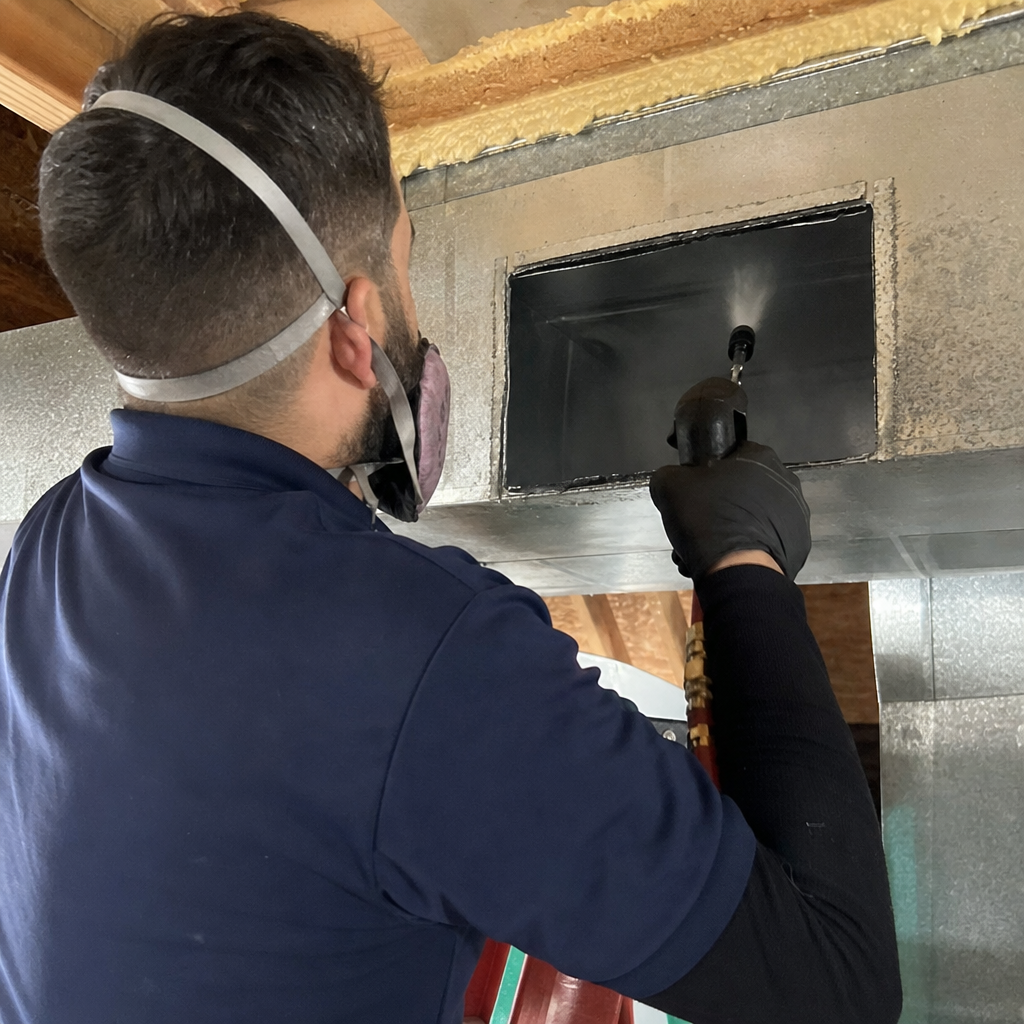
- DIY fogging that leaves biofilm intact. Self-reliant Exeter homeowners sometimes try consumer-grade foggers from hardware stores. The problem: without mechanical agitation, the product sits on top of biofilm without penetrating it. In Exeter’s irregular, unsealed duct interiors—common in retrofitted colonials—professional Rotobrush agitation and HEPA vacuuming is required to actually remove the contamination, not just perfume it.
- Allergen loads from estuary vegetation. The Great Bay wetlands surrounding Exeter produce pollen and organic particulate that inland Rockingham County communities don’t experience. These allergens enter leaky duct systems through unsealed returns and plenums, compounding indoor air quality issues. Standard 1-inch pleated filters don’t capture enough of this load; upgraded filtration combined with duct sealing is usually necessary.
Pricing for Air Quality & Sanitizing in Exeter, NH
Here’s what Exeter homeowners actually pay for air quality and sanitizing work:
| Service | Typical Range in Exeter |
|---|---|
| Bacteria Sanitizing (standard residential) | $280–$450 |
| Mold Treatment (moderate contamination) | $340–$620 |
| Odor Removal Protocol | $320–$580 |
| UV Light Installation | $380–$650 |
| Allergen Reduction (filtration + sealing) | $450–$780 |
| Annual UV Bulb Replacement | $85–$120 |
Exeter’s older housing stock and below-grade duct configurations typically push jobs toward the higher end of these ranges—more labor to access stone-cellar runs, more time to seal irregular chases, more material to treat moisture-compromised areas. We don’t quote by square footage; we inspect your actual duct configuration and contamination level, then give you a fixed price before any work begins. Estimates are free. Call (877) 517-5646 to schedule.
We Also Serve Cities Near Exeter
We regularly make the run from Lowell to Exeter and the surrounding Rockingham County and northern Essex County area. If you’re in Kingston, Seabrook, Amesbury, or Merrimac, the same technician, same equipment, and same pricing structure apply. The coastal humidity pattern extends through most of this corridor, so the moisture-remediation approach we use in Exeter translates directly to homes in these neighboring towns.
Serving Exeter, NH — Our Local Coverage Area
We’re based in the Exeter area and know this community well. Use the map below to see our service coverage — if you’re nearby, we can almost certainly help.
FAQs — Air Quality & Sanitizing in Exeter
Exeter’s proximity to the Squamscott River and Great Bay estuary keeps relative humidity 10–15% higher than inland New Hampshire towns year-round, which means ductwork—especially retrofitted runs in uninsulated stone cellars—rarely dries out completely. That persistent moisture creates near-ideal conditions for mold colonization inside supply and return plenums, making biological growth a structural issue rather than a cleanliness issue. Call (877) 517-5646 for a free inspection if you’re smelling must from vents—we’ll identify whether the source is active mold and what moisture pathway is feeding it.
Mechanical agitation with Rotobrush or equivalent equipment to dislodge biofilm, followed by professional antimicrobial fogging and—critically—sealing of the duct leaks that are pulling humid cellar air into the system. In Exeter’s pre-1900 colonials, we also typically recommend UV-C installation at the air handler for continuous suppression, since the stone-cellar moisture source can’t be fully eliminated. Call (877) 517-5646 for a fixed quote based on your actual duct configuration.
If your home has below-grade duct runs, a stone cellar, or any history of mold recurrence, yes—UV-C at the air handler is the most cost-effective long-term control measure. In Exeter’s humidity, mold returns within 12–18 months after cleaning alone. A properly sized Honeywell or Aprilaire UV lamp ($380–$650 installed) provides continuous suppression that breaks that cycle. Call (877) 517-5646 to discuss whether your system configuration would benefit.
The filter isn’t the problem. Musty odor in Exeter homes almost always originates from mold or bacterial growth on duct interiors, coil surfaces, or moisture-saturated plenum insulation—none of which a filter change addresses. The “old house smell” homeowners near Court Street and the historic district often accept as normal is actually active microbial contamination that professional cleaning and moisture remediation can eliminate. Call (877) 517-5646 for a free estimate—we’ll pinpoint the source.
Whole-home air purifiers integrated with your HVAC system can significantly reduce particulate loads, but they’re most effective when combined with duct sealing to prevent unfiltered estuary air from entering through leaks. In Exeter, we typically see the best results from Aprilaire media filtration or Honeywell electronic air cleaners paired with return-side sealing—otherwise you’re filtering air that’s already contaminated. Call (877) 517-5646 for an assessment of your current filtration and duct integrity.
Ready to solve your Exeter home’s air quality problem? Call (877) 517-5646 for a free estimate. Thomas Hernandez, owner and lead technician, will inspect your duct system, identify the moisture pathways and contamination sources specific to your home, and give you a fixed-price quote before any work begins. Same-day and next-day appointments available for active mold concerns.
Written by Thomas Hernandez, Owner at Titan Air Duct Cleaning Lowell, serving Exeter and the greater Merrimack Valley since 2010.